
Can you eat with a cracked or broken denture?
A crack does not always mean you have to stop wearing your denture straight away, but chewing on it is how a crack becomes a snap. Here is how to get through until it is repaired.
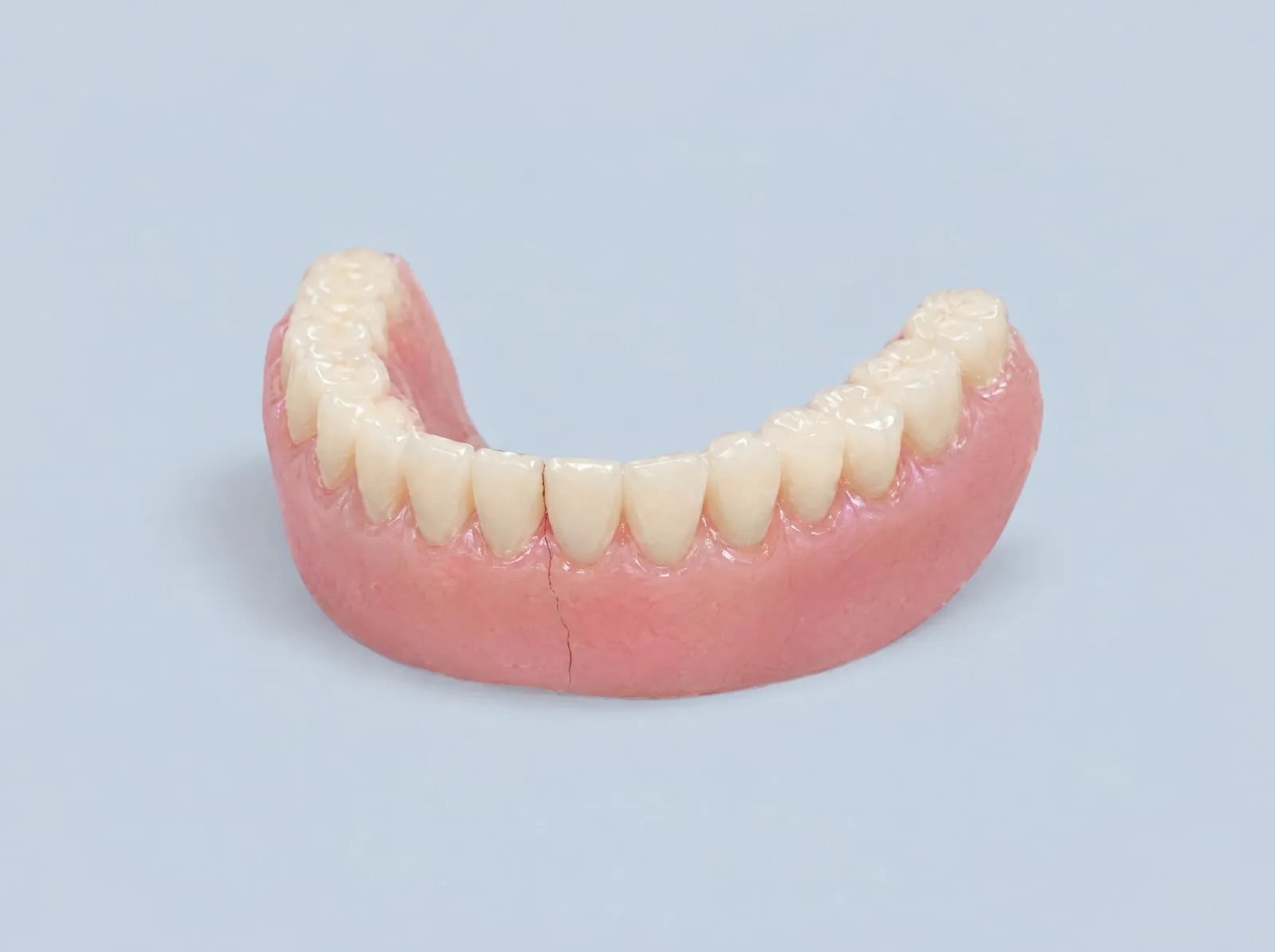
If it is cracked but still in one piece
If it still fits, nothing is sharp and it does not move when you bite, you can usually manage soft food for a short time. Every bite flexes the crack, so get it repaired as soon as you can.
- Stick to soft food such as soup, eggs, fish, pasta and mashed potato
- Cut food small and chew on both sides
- Skip nuts, crusty bread, toffee and anything you would bite into with your front teeth
When to take it out
Take the denture out and leave it out if any of these apply. A sharp edge can cut your gums or cheek, and a loose piece could be swallowed.
- It has broken into pieces
- It has a sharp or rough edge
- It rocks, clicks or flexes when you bite
- It hurts or rubs
Eating without your denture
For a day or so, soft and blended food is easiest: yoghurt, porridge, soup, scrambled eggs and smoothies. Most of our repairs are ready in under an hour, so you should not be without it for long.
Why cracks happen
Most cracks come from a drop or from hard food. A denture that has become loose also bends more when you bite, which can start a crack. If yours feels loose, ask us about a reline while you are in.